
0 ratings
0.0
- Floor Exercise
- Balance Beam
- Routine Composition
Gymnastics Offers
Single Lesson
Get one-off instruction as needed
Analysis
With video analysis, I’ll take a closer look at your gymnast’s routine and provide individualized feedback on things such as: ✨ Form and technique ✨ Execution and artistry ✨ Dance and presentation ✨ Connection and rhythm ✨ Composition and routine construction ✨ Areas where deductions may be occurring ✨ Specific corrections and drills to help improve ✨ Ways to make the routine feel more confident, polished, and consistent
Full Remote
Send me your practice footage and let’s get to work! I’ll break down your technique, provide detailed corrections, and create personalized drills to help you improve. We’ll work on not only the skill itself, but also confidence, consistency, execution, and performance. You’ll leave each lesson knowing exactly what to work on next!
Live Call
The biggest benefit of a live call is that I can watch, communicate, and make adjustments in real time. Your gymnast can ask questions, show me a skill or routine, receive feedback, make a correction, and try it again. My coaching approach is always compassionate, constructive, and individualized. I want athletes to understand why we are making a correction—not simply be told that something is wrong. My goal is to help each gymnast become more confident, aware, and independent in their training.
Coaching Philosophy
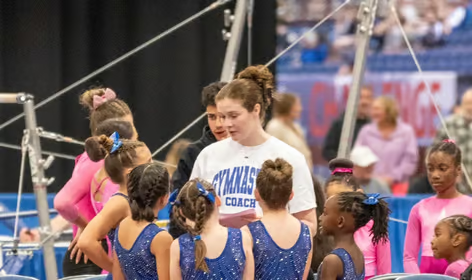
My Xcel Gymnastics Coaching Philosophy My coaching philosophy is built on one simple belief: I coach people first and gymnasts second. Gymnastics is a sport that demands discipline, courage, consistency, patience, and resilience. But before an athlete can truly develop those qualities, they need to feel that they belong. They need to know that their coach sees them as a whole person—not simply as a score, a level, a skill, or a place in the lineup. As an Xcel coach, my goal is to create an environment where athletes are challenged to grow while also feeling supported enough to take risks, make mistakes, and learn from them. I want my gym to be a place where athletes can work hard and have high expectations for themselves without losing the joy that brought them to gymnastics in the first place. Compassion Comes First Compassion is at the center of how I coach. Every athlete comes into the gym carrying something different. Some days they are confident and ready to work. Other days they may be frustrated, tired, nervous, overwhelmed, or struggling with something outside of gymnastics. I believe it is my responsibility to recognize that difference and coach the athlete in front of me. Compassion does not mean avoiding difficult conversations or lowering expectations. In fact, I believe the opposite. I can care deeply about an athlete while still holding them accountable. I can challenge them while reminding them that one bad practice does not define them. I can expect effort, respect, focus, and commitment while also understanding that athletes are human. I want my athletes to know that they do not have to be perfect to be worthy of encouragement. Mistakes are not something I want them to fear. Mistakes are part of the process. Development Over Perfection Gymnastics can easily become a sport where athletes focus only on what they cannot do yet. My responsibility is to help them recognize how far they have already come. I want to celebrate the small victories: the skill that finally clicked, the routine that became more consistent, the athlete who spoke up for herself, the gymnast who tried something that scared her, or the teammate who encouraged someone else. Scores and placements have their place in competitive gymnastics, but they are not the only measurement of success. Progress is success. Effort is success. Courage is success. Resilience is success. I want athletes to understand that improvement is rarely linear. Some skills take weeks, months, or even years to develop. There will be plateaus, setbacks, fears, and frustrating practices. My job is to help athletes understand that those moments are not evidence that they are failing. They are part of becoming better. Building Confident Gymnasts One of my biggest goals as a coach is to develop confidence. Confidence in gymnastics is not simply believing that you will always succeed. True confidence is knowing that you can handle the possibility of failure. I want my athletes to learn to say, “I haven’t done this yet,” rather than “I can’t do this.” I want them to learn how to manage nerves, recover after mistakes, advocate for themselves, and trust the work they have put in. I want them to understand that confidence comes from preparation, repetition, perseverance, and learning to trust themselves. As athletes grow, I also want them to become increasingly independent. My ultimate goal is not to have athletes who need me standing beside them for every skill. My goal is to teach them how to eventually become their own coaches—how to recognize what they need, make adjustments, and take ownership of their development. High Expectations and Accountability Being compassionate does not mean being permissive. I believe athletes thrive when expectations are clear and consistent. I expect my gymnasts to work hard, listen, respect their teammates and coaches, take care of the equipment, and contribute positively to the team environment. Accountability is an important part of development because gymnastics teaches athletes that their choices have consequences. Showing up prepared, giving consistent effort, staying focused, and supporting teammates all matter. At the same time, accountability should never be rooted in humiliation, fear, or embarrassment. I do not believe an athlete needs to be torn down in order to be motivated. I want to challenge athletes without breaking them down. When correction is necessary, I want it to be constructive. I want athletes to understand not only what they need to change, but why it matters and how they can improve. Creating a Safe Environment to Fail Gymnastics requires athletes to do things that are often uncomfortable and scary. They have to fall, miss skills, repeat drills, and attempt things before they feel completely ready. Because of that, psychological safety matters to me. I want athletes to feel comfortable saying, “I’m scared,” “I don’t understand,” or “Can you help me?” without feeling ashamed. Fear is information. Frustration is information. Mistakes are information. My job is to listen, figure out what the athlete needs, and help them move forward. That does not mean I will allow fear to permanently dictate what an athlete does. It means I will work with them to understand the fear, break the challenge into manageable pieces, and help them build the confidence necessary to move through it. Team Culture I believe that the culture of a team is just as important as the skills being taught. I want my athletes to understand that their teammates are not their competition inside the gym. A successful team is one where athletes celebrate one another, encourage one another, and understand that everyone is on a different journey. I want older or more experienced athletes to model leadership. I want newer athletes to feel welcomed. I want athletes to be able to celebrate another gymnast’s success without feeling that someone else’s accomplishment diminishes their own. There is room for everyone to succeed. I want to build a team culture based on respect rather than comparison, encouragement rather than jealousy, and accountability rather than blame. Xcel-Specific Philosophy I love the Xcel program because it provides opportunities for athletes with different goals, abilities, and circumstances to experience competitive gymnastics. Not every gymnast needs to have the same trajectory. Some athletes may dream of progressing through every level. Some may want to compete recreationally at a higher level. Some may discover a passion for one event. Others may simply want to challenge themselves, make friends, build confidence, and enjoy being part of a team. I believe all of those goals are valid. My responsibility is to help each athlete understand their own potential rather than forcing every gymnast into the same definition of success. I want Xcel athletes to learn that gymnastics can be both competitive and joyful. They can work hard toward excellence without believing that their worth is determined by a score. Coaching the Whole Person The lessons learned in gymnastics extend far beyond the gym. I want my athletes to learn how to deal with disappointment, accept constructive criticism, manage pressure, work toward long-term goals, communicate with others, and continue working when something does not come easily. Those lessons will matter long after their gymnastics careers are over. Years from now, I hope my athletes remember more than the medals they won or the skills they performed. I hope they remember that they had a coach who believed in them, challenged them, listened to them, and cared about who they were becoming. If an athlete leaves gymnastics more confident, resilient, compassionate, disciplined, and willing to believe in herself, then I consider that a meaningful success. My Commitment as a Coach I also recognize that coaching is a responsibility that requires me to continue growing. I will make mistakes. I will have difficult days. I will not always have the perfect answer. But I will continue learning, listening, reflecting, and improving. I want to model for my athletes that growth does not stop simply because you become the coach. I will strive to communicate clearly, lead consistently, listen before reacting, and treat every athlete with dignity. I will continue educating myself about coaching, athlete development, safety, and the physical and emotional needs of young gymnasts. Most importantly, I will never lose sight of why I coach. I coach because I believe gymnastics can change people. It can teach a child that something frightening can eventually become familiar. It can teach a teenager that failure does not mean she is a failure. It can teach an athlete how to work patiently toward something that takes years. It can teach confidence, discipline, resilience, humility, and courage. And I want to be the kind of coach who helps athletes experience those lessons without losing themselves along the way. My Promise to My Athletes I promise to see you as more than a gymnast. I promise to challenge you because I believe you are capable of more, not because I expect you to be perfect. I promise to celebrate your progress, not just your accomplishments. I promise to hold you accountable while giving you grace. I promise that mistakes will be treated as opportunities to learn. I promise to listen when you are struggling. I promise to encourage you when you doubt yourself. I promise to celebrate your teammates alongside you. And I promise to care about the person you become just as much as the gymnast you become. My goal is not simply to produce better gymnasts. My goal is to help develop strong, confident, resilient young people who happen to do gymnastics. That is the coach I want to be, and that is the environment I want to create.
